Satellite Collision Risk Soars: 'CRASH Clock' Shows Dangerously Low Timeframe
Okay, so space is getting a little crowded, right? It's like that parking lot at the mall during the holidays. But instead of minivans, we're talking about satellites, and instead of fender-benders, we're looking at potentially catastrophic collisions. A recent study – and I say "recent" because this stuff changes fast – highlights how close we are to a real problem up there.
Imagine this: all the satellites suddenly losing their ability to dodge each other. That's the scenario these researchers looked at. They even came up with a name for their measurement: the CRASH Clock. It essentially calculates how long we have before a major collision if things go south. And the answer? A shockingly short 2.8 days, based on the amount of junk we have floating around up there last June. Back in 2018, before everyone and their dog started launching mega-constellations, that clock was at a much more comfortable 121 days.
SpaceX, with its massive Starlink constellation, gets a lot of attention here. And rightfully so. The study points out that Starlink satellites are constantly making tiny adjustments to avoid hitting other objects. According to the research, Starlinks make avoidance moves 41 times per satellite each year – which translates to roughly one move every 1.8 minutes across the whole constellation!
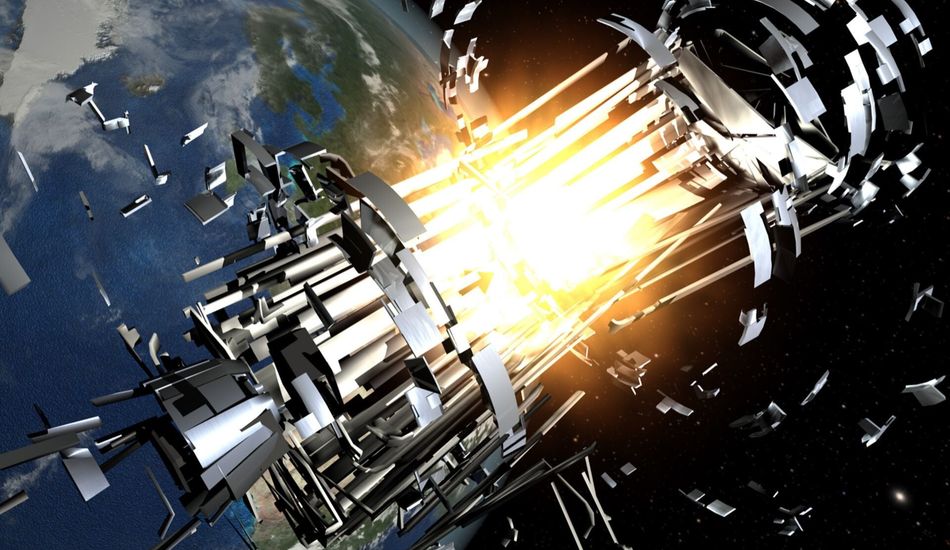
However, it’s not solely on Elon Musk. All these mega-constellations whizzing around in low-Earth orbit (LEO) are playing bumper cars every 22 seconds. Think about it: A collision in space isn't just a bump in the road. A major crash could trigger a chain reaction called Kessler syndrome, where one collision leads to exponentially more debris, making LEO a cosmic junkyard. No one wants that. That would make it far more difficult launch new satellites and severely impact existing ones.
So, what can cause a total system failure? The researchers mentioned a couple of scary possibilities: a massive solar storm frying the satellites' electronics or a software glitch causing them to go haywire. Neither scenario sounds pleasant. It's clear we need to get our act together, not just with Starlink, but with all the satellites we're throwing into orbit. Let's hope that the decision-makers take this CRASH clock seriously and think about a better way to manage space traffic before it’s too late.
Source: Gizmodo