
Quadric Aims to Revolutionize AI by Shifting Focus from Cloud to Local Devices
The world is changing, and AI is evolving. We're seeing a growing push to move AI processing away from massive cloud data centers and onto our devices. Why? Cost, control, and a desire for technological independence are the main drivers. And companies like Quadric are betting big that this trend is here to stay.
Quadric, a startup with roots in the early days of Bitcoin mining (yes, really!), is focused on on-device AI inference. Basically, they're creating the tech that allows your laptop, car, or factory equipment to run AI models directly, without constantly pinging a server in the cloud. And things are looking good for them. Their licensing revenue jumped from $4 million in 2024 to somewhere between $15 and $20 million in 2025. That's quite the leap!
The company's CEO, Veerbhan Kheterpal, is aiming for even more, targeting up to $35 million this year. All this growth has bumped Quadric's valuation to around $270-$300 million, quite a jump from their $100 million valuation in 2022. They also just snagged $30 million in a Series C funding round, which shows investors are pretty interested in what they're doing.
Why On-Device AI?
So, why is everyone so excited about this? Well, think about it. If your car's driver-assistance system needs to make a split-second decision, you don't want it relying on a potentially laggy cloud connection. On-device AI allows for real-time processing, which is crucial in many applications. The proliferation of transformer models since 2023 has simply increased interest, as they become implemented in every area.
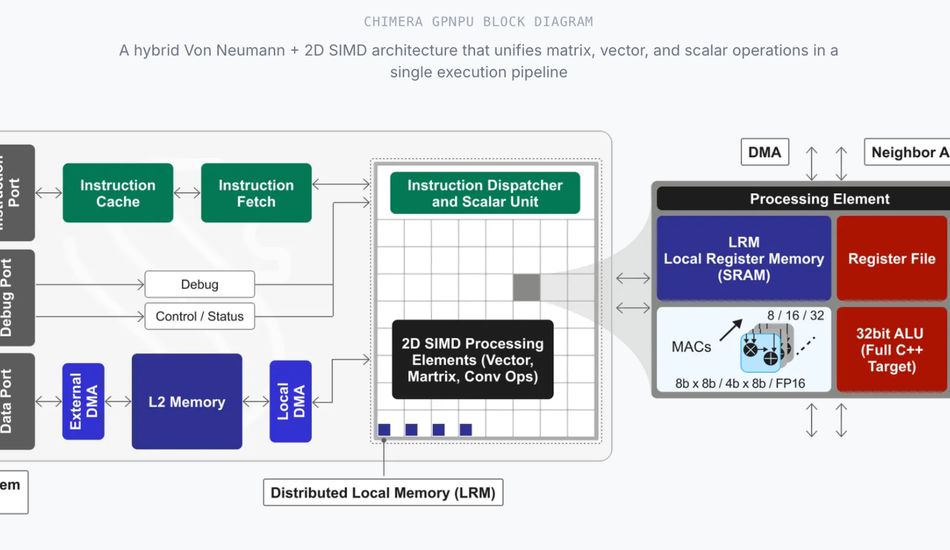
Quadric isn't trying to compete with Nvidia in the data center space. Instead, they're building a "CUDA-like" infrastructure specifically for on-device AI. They don't make chips themselves. Instead, they license their programmable AI processor IP – essentially, a blueprint – that companies can integrate into their own hardware. They also provide the software and tools needed to run AI models on these chips.
Their customers are diverse, ranging from printer manufacturers to automakers. And according to Kheterpal, we can expect to see the first products powered by Quadric's tech hitting the market this year, starting with laptops.
Sovereign AI: A New Frontier
But Quadric isn't just focused on commercial applications. They're also exploring the concept of "sovereign AI." This is all about countries wanting to reduce their reliance on AI infrastructure based in other nations. Imagine countries like India and Malaysia, which are exploring AI strategies which ensures more local control and reduced dependence on places like the US. They want to develop their own AI capabilities, from the hardware to the models, and Quadric wants to be a part of that.
For chipmakers, the challenge is keeping up with the rapid pace of AI model development. Quadric believes its programmable processor IP offers a solution, allowing customers to adapt to new models through software updates instead of costly hardware redesigns. That can be a big deal. I mean, chip development can take years, while AI models can evolve in a matter of months.
Quadric is positioning itself as a different kind of player, offering an alternative to companies like Qualcomm, which tend to lock customers into their own silicon. They are also trying to be distinct from traditional IP suppliers like Synopsys and Cadence, whose engine blocks many customers find difficult to program.
Of course, Quadric is still in the early stages. They have a limited number of customers, and their long-term success depends on turning licensing deals into high-volume shipments and recurring royalties. But I think their focus on on-device AI and sovereign AI is a smart move, and they could be a major player in the future of AI. The potential to change the tech landscape is definitely there, it will be interesting to observe how they perform.
1 Image of On-Device AI:
Source: TechCrunch