Hints of Dark Matter Found? Why Scientists Are Still Cautious
For almost a century, astronomers have been on a quest to find dark matter, the mysterious substance believed to be the glue holding galaxies together. We've got plenty of clues that it exists, but no one has actually seen it directly. Now, a new study suggests we might be on the verge of a breakthrough.
A professor from the University of Tokyo, Tomonori Totani, claims to have found gamma-ray emissions that seem to come from dark matter, using data from NASA's Fermi Gamma-ray Space Telescope. According to his study, this radiation might have been released by colliding WIMPs (weakly interacting massive particles). WIMPs are basically top contenders for what dark matter could be made of.
While it sounds exciting, other experts are hesitant. They warn that this signal could be just cosmic noise, or another false alarm. You know, kind of like when you think you hear your phone ringing, but it's just the TV?
Totani admits that it's too early to say for sure that these gamma rays are from dark matter, but he points out that they don't seem to come from typical space sources. So, at the very least, he thinks it's the most promising lead we've had so far.
Astronomers think dark matter exists because, without it, certain things in the universe don't make sense. For instance, galaxies spin way too fast and are held together much tighter than they should be, based on the amount of visible matter we can see.
The idea is that WIMPs mainly interact through gravity, but their interactions with light and nuclear forces are so weak that we can't detect them. However, when they collide, they should, in theory, annihilate each other and release gamma rays.
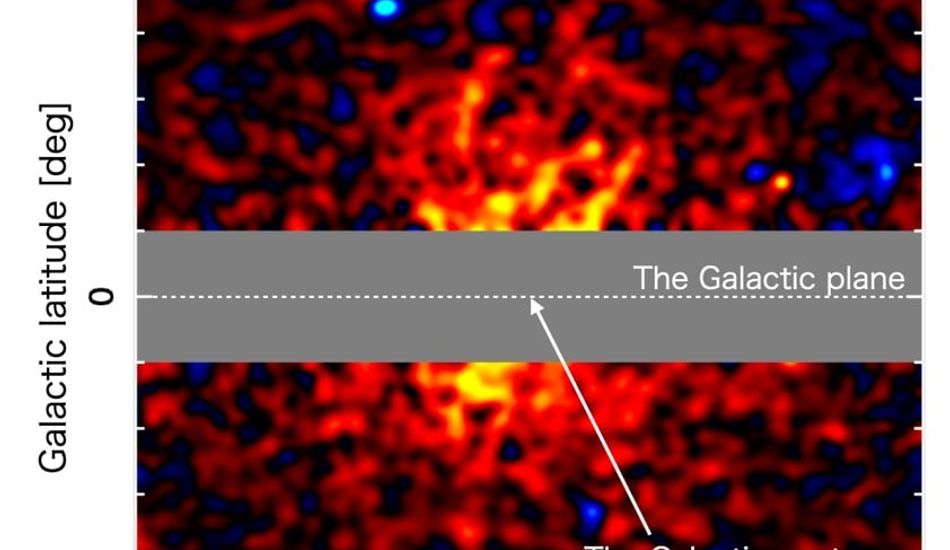
Researchers have been looking for these gamma rays for years, focusing on areas of the Milky Way where dark matter is thought to be concentrated, like the galactic center. Since those searches haven't turned up anything, Totani decided to look at the galaxy's halo region instead.
The Halo Region: A New Hope?
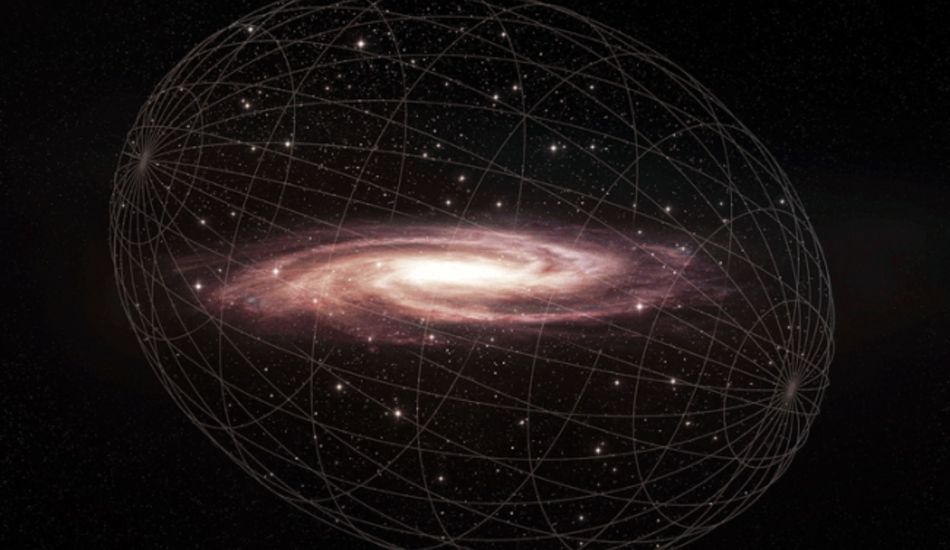
The halo is a large, spherical area surrounding the Milky Way's galactic disk, containing stars, gas, and, presumably, a lot of dark matter. By looking at Fermi satellite data of the halo, Totani spotted high-energy gamma-ray emissions that match the shape we'd expect from a dark matter halo.
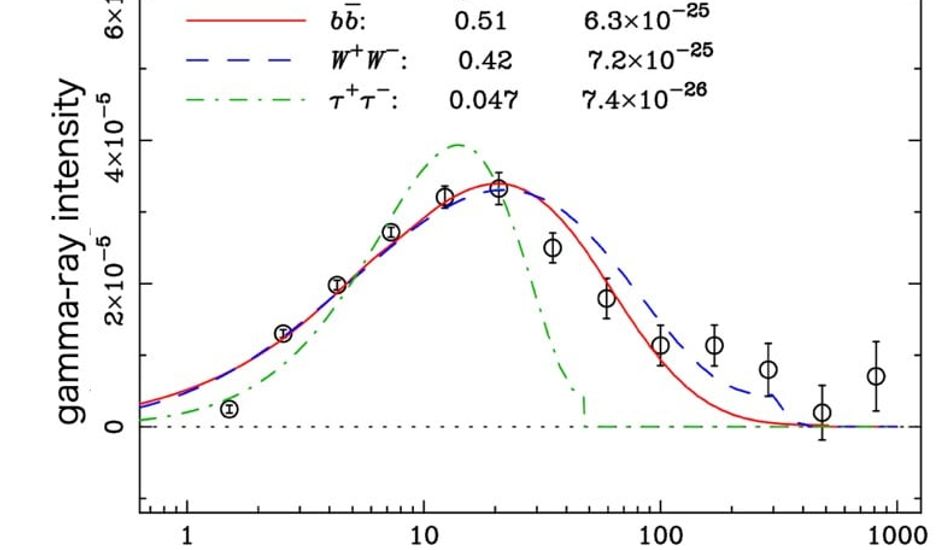
The intensity of the gamma-ray emissions he found also matches what astronomers would expect from WIMP annihilation. He even estimated how often WIMPs would annihilate each other based on the gamma-ray intensity, and that lined up with theoretical predictions too! It's like finding puzzle pieces that seem to fit together perfectly, which raises the hope that he might have found a signal produced by dark matter WIMPs.
However, experts caution that these gamma rays aren't a sure thing. There are many things in space that can create gamma rays. What makes Totani's gamma rays interesting is how powerful they are. They have a photon energy of 20 gigaelectronvolts, which is pretty high.
While Totani's gamma emissions fit the description of what we'd expect from WIMP annihilation, there could be other explanations. For example, it could be high-energy phenomena like neutron star collisions or solar wind from pulsars. More studies are needed to confirm Totani's findings.
Another physicist pointed out that many scientists have already looked at the Fermi satellite data that Totani used, and none of them found the excess gamma-ray emissions that he did. The physicist suspects that the high-energy gamma-ray emissions Totani found might actually be a result of his analysis methods.
In the end, as another physicist put it: finding and understanding dark matter is incredibly hard. You can't just jump to conclusions based on one piece of evidence. I think we need multiple, solid confirmations before we can say we've truly found it.
So, the hunt for dark matter goes on. It remains to be seen whether future studies will support or disprove Totani's findings, but either way, they will help us get a better grasp of the invisible matter that shapes our universe.
2 Images of Dark Matter:
Source: Gizmodo