Ancient Bees Found Nesting in Bones: A Bizarre Discovery
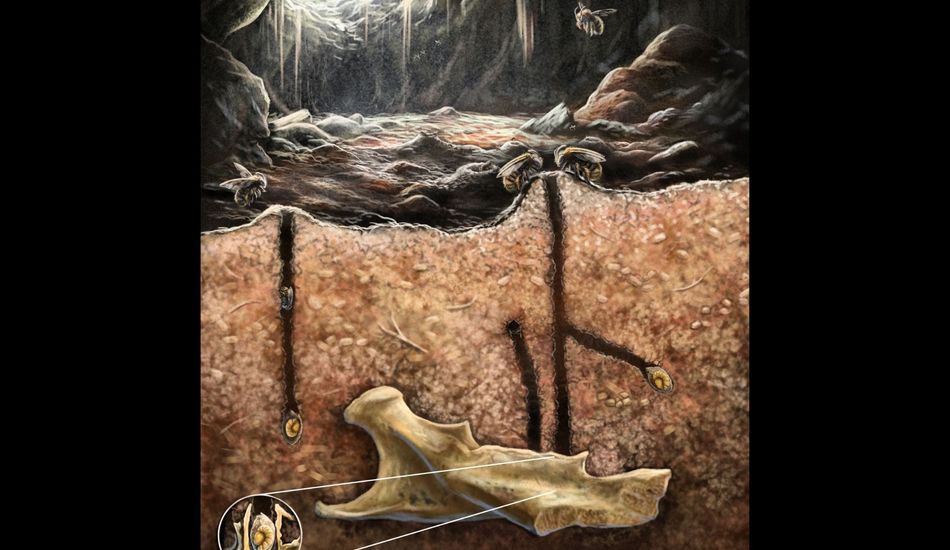
Scientists poking around a cave in the Caribbean stumbled upon something totally unexpected: fossilized bee nests inside the bones of ancient animals! I mean, who would have thought, right? It's like something out of a bizarre nature documentary.
These aren't your typical honey-making, hive-loving bees. We're talking about a solitary species that decided the hollowed-out remains of rodents and sloths made for prime real estate. Talk about a unique approach to finding a home! The paleontologists were actually hunting for fossils of mammals, reptiles and birds when this happened, so they weren't even looking for insects. It just goes to show, you never know what you might find when you start digging.
The cave, located on the island of Hispaniola, was packed with fossils, especially those of hutias (think guinea pig relatives). While finding hutia fossils was cool on its own, one researcher noticed something weird about a jawbone – it was too smooth. At first, they thought wasps might be involved, but the evidence didn't quite add up.
A Macabre Housing Market
Turns out, the smoothness was the work of ancient burrowing bees, now named Osnidum almontei. These bees, which lived thousands of years ago, were using the bones as ready-made apartments. They even found nests in a hutia vertebra and a sloth tooth. Sloths in the Caribbean? Yeah, they used to be a thing before humans came along and messed everything up.
So, how did this all happen? Well, it seems ancient barn owls used the cave as both a home and a garbage dump for the hutias they hunted. The bee's discovered an appealing place to built their nests, thanks to the accumulated soil in the cave, as the region wasn't suited for them.
While most of us picture bees as social creatures building elaborate hives, the truth is, most bee species are loners. They use all sorts of materials and structures for nesting. However, these ancient bees took it to a whole new level. What makes these bees special is that they picked chambers in bones that were already buried, which is weird. Only one instance of bees using a cave for nests has been documented before.
This discovery has the researchers rethinking how they handle fossils. From now on, they will be more careful to not destroy traces of ancient insect activity in the sediments inside the fossils they find. So, next time you see a fossil, remember it might be hiding a tiny, ancient apartment complex! They're now working on describing the other fossils recovered from the cave, which should include never-before-characterized species of mammals, reptiles, and birds, so stay tuned!
Source: Gizmodo